Commercial LPG Dealership Investment: Costs to Plan For Before Starting
How much does it cost to start a commercial LPG dealership in India?
It is often the first question an entrepreneur asks when exploring the LPG distribution business. But the answer involves more than an initial investment figure.
Storage facilities, cylinder inventory, transportation, licensing, manpower and working capital can all influence the total amount required. The actual costs depend on your business location, proposed operations and dealership agreement.
If you are researching commercial LPG dealership investment costs, understanding these expenses before committing funds can help you make a more informed decision.
This guide explains the major investment categories, recurring expenses and financial planning considerations involved in starting a commercial LPG distribution business. It also explains how to request current dealership information from Godavari Gas.
Is There a Fixed Investment Cost for a Commercial LPG Dealership?
There is no single investment amount that applies to every commercial LPG dealership in India.
Consider two prospective distributors. One already operates an industrial supply business with suitable logistics resources. Another is starting a completely new distribution operation and needs to arrange premises, transport and manpower.
Their investment requirements could be significantly different.
Commercial LPG dealership costs depend on several factors:
- The proposed dealership territory
- Available business infrastructure
- Storage and regulatory requirements
- Initial stock arrangements
- Delivery and transportation responsibilities
- Operating scale and working capital
- Commercial conditions agreed with the LPG supplier
Godavari Gas identifies initial stock investment as a region dependent consideration on its dealership page. However, it does not publish a universal investment amount.
Prospective applicants should therefore request current, written investment requirements before making financial commitments.
1. Business Premises and Storage Infrastructure
One of the first costs to investigate is the infrastructure required for your proposed distribution operation.
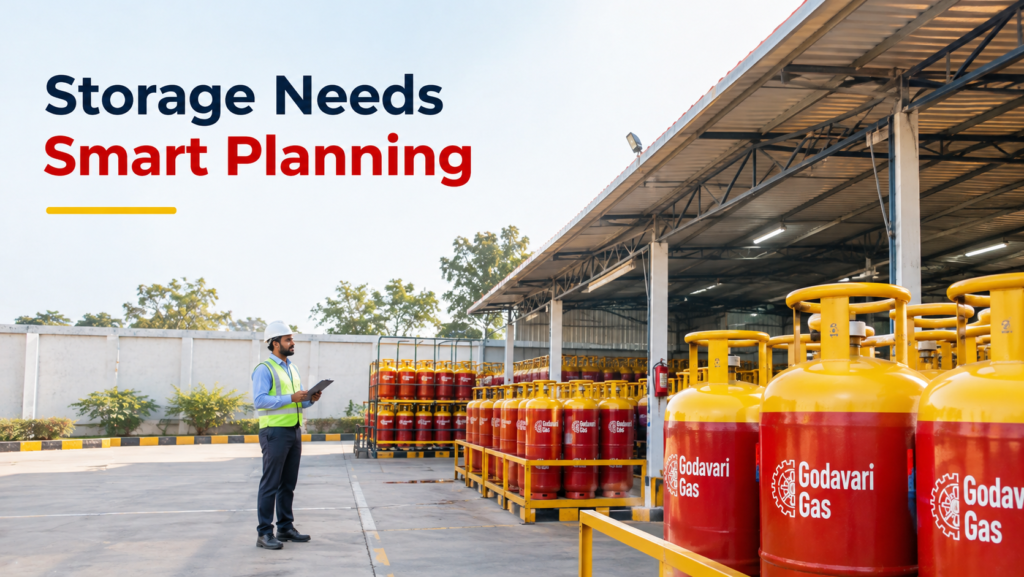
A commercial LPG dealership may need appropriate premises for administration, cylinder storage and distribution activities, depending on the agreed operating model.
Buying or Renting Suitable Premises
The cost of premises varies according to location, available infrastructure, property terms and suitability for the intended activity.
Before buying or renting a property, determine whether the site can meet the applicable storage, access and regulatory requirements.
A commercially convenient location is not necessarily suitable for LPG cylinder storage.
Storage Facility Development
Potential infrastructure expenses may involve approved site preparation, suitable storage arrangements, access facilities and other safety provisions required for the specific operation.
These requirements should be determined by competent professionals and the relevant authorities.
Do not spend money developing a storage facility before confirming which approvals and specifications apply.
2. Initial LPG Stock Investment
Initial stock is another important component of commercial LPG dealership investment.
A distributor needs to understand how products will be supplied, what inventory arrangements apply and how stock payments will be managed.
Commercial terms can differ between suppliers and dealership agreements.
Questions About Initial Stock
- What initial stock commitment does the company require?
- Which commercial LPG products are included?
- How are cylinders issued, accounted for and returned?
- Who owns the cylinders under the arrangement?
- Are any deposits or other financial commitments applicable?
- How are subsequent orders and payments handled?
These questions matter because cylinder ownership arrangements, product purchases, deposits and working capital are not necessarily the same expense.
Ask the supplier to explain the commercial terms clearly before calculating your initial investment.
3. Transportation and Delivery Expenses
Commercial LPG distribution involves more than keeping cylinders available. Products must also reach authorised commercial customers through appropriate delivery arrangements.
Transportation can become a significant operating expense, particularly when customers are spread across a large territory.
Vehicle Related Costs
Depending on the dealership model, possible expenses include vehicle purchase or leasing, permitted modifications where required, insurance, fuel, maintenance and driver costs.
Any vehicle used for LPG cylinder transportation must comply with applicable transport and safety requirements.
Delivery Route Planning
Delivery expenses can also depend on customer locations, order sizes, route distances and delivery frequency.
For example, serving several nearby commercial kitchens may involve different logistics from supplying customers across widely separated industrial areas.
Understanding your proposed customer geography can help you estimate transportation requirements more accurately.
Godavari Gas lists a delivery vehicle as a preferred infrastructure consideration. Applicants should confirm whether the company has specific vehicle requirements for their proposed territory.
4. Licensing, Approvals and Compliance Costs
Commercial LPG distribution involves regulated products, making compliance an essential part of business planning.
The approvals required depend on the nature of the activity, proposed storage arrangements, premises and applicable legislation.
Business Registration and Trade Licences
Applicants should verify which business registrations, tax registrations, trade permissions and other local approvals apply to their operations.
These requirements can vary depending on the business structure and location.
PESO and LPG Storage Requirements
The Petroleum and Explosives Safety Organisation, commonly known as PESO, administers important regulations relating to gas cylinders and specified storage activities in India.
The Gas Cylinders Rules, 2016, together with applicable amendments, are relevant when assessing cylinder storage and licensing requirements.
Budgeting may need to account for application charges, documentation, technical drawings, professional consultation, inspections and other applicable compliance expenses.
The exact requirements and official fees must be checked against the rules currently in force.
For authoritative information, consult the PESO Gas Cylinders Rules and the 2026 amendment information.
Regulatory expenses should be confirmed before making property or infrastructure commitments.
5. Manpower and Administrative Expenses
A commercial LPG distribution business also involves ongoing administration and customer coordination.
Depending on the size and responsibilities of the operation, staffing requirements may include authorised delivery personnel, customer service, administration and inventory management.
Common Operating Expenses
- Employee salaries and applicable employment costs
- Staff training and appropriate safety instruction
- Office expenses and communication
- Inventory and accounting systems
- Equipment maintenance
- Insurance and professional services
- Other legitimate administrative expenses
These costs continue even when monthly sales fluctuate. Your business plan should account for them separately from initial setup investment.
6. Working Capital for a Commercial LPG Dealership
Working capital is one of the most important financial considerations in a distribution business.
It refers to the resources available to support everyday business operations, including paying suppliers and meeting operating expenses while awaiting customer payments.
For example, a commercial customer may purchase LPG regularly but pay according to an agreed credit period. The distributor may still need to fund stock purchases and delivery expenses before receiving that payment.
What Should Working Capital Cover?
- Payments for subsequent stock purchases
- Transportation and fuel expenses
- Employee salaries
- Premises and administrative costs
- Customer payment delays
- Unexpected but legitimate operating expenses
Working capital requirements depend on stock turnover, supplier payment conditions, customer credit terms and operating expenses.
Prepare a monthly cash flow forecast instead of assuming that revenue and available cash will always be the same.
7. Initial Investment vs Monthly Operating Costs
Separating initial expenditure from ongoing expenses makes financial planning clearer.
The following table can be used as a starting point when preparing a commercial LPG dealership budget.
| Expense Category | Initial Cost | Recurring Cost |
|---|---|---|
| Business premises | Deposit or acquisition, if applicable | Rent and maintenance, if applicable |
| Storage infrastructure | Approved setup expenses | Maintenance and applicable renewals |
| LPG stock | Initial stock commitment | Replenishment purchases |
| Transportation | Vehicle acquisition or lease setup | Fuel, maintenance and staffing |
| Compliance | Applicable approvals and professional costs | Renewals and ongoing obligations |
| Employees | Recruitment and initial training | Salaries and employee expenses |
| Administration | Office and systems setup | Utilities, communication and accounting |
These categories are for planning purposes. Not every cost applies to every dealership arrangement.
Request company specific quotations and professional advice before filling in actual amounts.
8. How to Evaluate LPG Dealership Profitability
Investment cost is only one side of the financial decision. Entrepreneurs should also understand how the business could generate enough income to cover its operating expenses.
Profitability depends on actual commercial terms, customer demand, sales volumes and costs.
Understand Your Contribution Margin
Start by identifying the revenue received from a sale and the directly attributable cost of providing that sale.
The difference, before fixed expenses and other applicable adjustments, helps explain the contribution available to cover operating costs.
The calculation should use the actual purchase terms, selling terms, delivery costs and relevant taxes applicable to the business.
Estimate Break Even Requirements
Once fixed expenses and contribution margins are understood, an entrepreneur can assess the approximate sales activity needed to cover costs.
Use several scenarios rather than relying on a single optimistic sales projection.
For instance, consider how your finances would change if customer acquisition takes longer than expected, transport expenses increase or commercial customers delay payments.
Godavari Gas does not publish a guaranteed dealership profit figure. Applicants should obtain actual terms and prepare an independent feasibility assessment.
9. Can Existing Distributors Reduce Setup Expenses?
Entrepreneurs who already operate a distribution business may have resources that could be relevant to commercial LPG operations.
These might include customer relationships, administrative systems, business experience or existing transportation arrangements.
However, previously owned resources are not automatically suitable or authorised for LPG activities.
Any premises, vehicle or operational arrangement must be evaluated against the requirements applicable to commercial LPG distribution.
Existing gas distributors, industrial suppliers and traders are among the applicant categories identified by Godavari Gas.
Learn more about the company’s commercial LPG dealership opportunities.
10. Questions to Ask Before Making an Investment
Before committing money to a dealership, ask the supplier for clarity on the following matters:
- What is the current initial investment requirement for my region?
- Are there application, security deposit or other contractual charges?
- What initial stock will I need to arrange?
- Who is responsible for cylinder ownership and related deposits?
- What storage and transport infrastructure must I provide?
- Which operating expenses will be my responsibility?
- What dealership territory is available?
- How are dealer margins and payment terms determined?
- What support is included in the dealership agreement?
- What conditions apply to renewal or termination?
Ask for important commercial terms in writing and consider independent financial and legal review before signing an agreement.

Commercial LPG Dealership Investment with Godavari Gas
Godavari Gas offers dealership opportunities to eligible entrepreneurs and businesses interested in LPG distribution.
Its published dealership information identifies basic storage infrastructure, valid trade licences, a preferred delivery vehicle and region dependent initial stock investment as relevant considerations.
However, the exact financial requirements and commercial conditions must be confirmed directly with the company.
If you are evaluating a dealership in Hyderabad or another available territory, prepare your business background, preferred location and existing infrastructure details before submitting an enquiry.
Visit the Godavari Gas Dealership Opportunities page for current partnership information.
Frequently Asked Questions
1. How much does a commercial LPG dealership cost in India?
There is no universal investment figure. Costs depend on storage, stock arrangements, transportation, licensing, working capital and the dealership agreement. Request current financial requirements from the LPG company.
2. Does Godavari Gas publish a fixed dealership investment amount?
The company’s published dealership page mentions initial stock investment according to regional requirements but does not specify one fixed amount for all applicants.
3. What is the difference between investment and working capital?
Initial investment generally covers establishing the operation and its initial commitments. Working capital supports recurring expenses, inventory purchases and customer payment cycles.
4. Is a storage godown necessary for an LPG dealership?
Storage requirements depend on the approved business arrangement. Godavari Gas identifies suitable storage infrastructure as a consideration, and all applicable safety and regulatory requirements must be met.
5. Can I start a commercial LPG dealership with an existing distribution business?
Existing distributors may apply if they meet the company’s eligibility requirements. Their current resources must still be evaluated for suitability and compliance with LPG specific requirements.
6. Are commercial LPG dealership profits guaranteed?
No. Financial performance depends on actual margins, demand, operating expenses and business management. Applicants should evaluate their financial projections independently.
Final Thoughts: Plan the Investment Before Starting
A commercial LPG dealership investment should be evaluated through a complete business plan rather than a single advertised cost figure.
Understanding storage expenses, initial inventory, transportation, regulatory obligations, manpower and working capital will help you assess the practical requirements of distribution.
Before committing funds, confirm the company’s current terms, understand your responsibilities and evaluate your proposed market.
If you are considering a commercial LPG dealership with Godavari Gas, the next step is to enquire about the requirements relevant to your location and business background.
Planning Your Commercial LPG Dealership Investment?
Connect with Godavari Gas to enquire about current dealership requirements, infrastructure expectations and investment considerations for your proposed territory.