How to Start a Commercial LPG Dealership in India: A Complete Business Guide
Starting a commercial LPG dealership can be an interesting business opportunity for entrepreneurs who want to work with restaurants, hotels, commercial kitchens and industrial customers. But before investing in cylinders, storage facilities or delivery vehicles, there are a few important things you need to understand.
How does commercial LPG distribution actually work? What kind of customers will you serve? How much investment should you plan for? And what approvals might you need before starting operations?
These are the questions worth answering before making a business commitment.
This guide explains how to start a commercial LPG dealership in India, from researching your local market to preparing the necessary infrastructure and exploring dealership opportunities with Godavari Gas.
1. Understand How the Commercial LPG Dealership Business Works
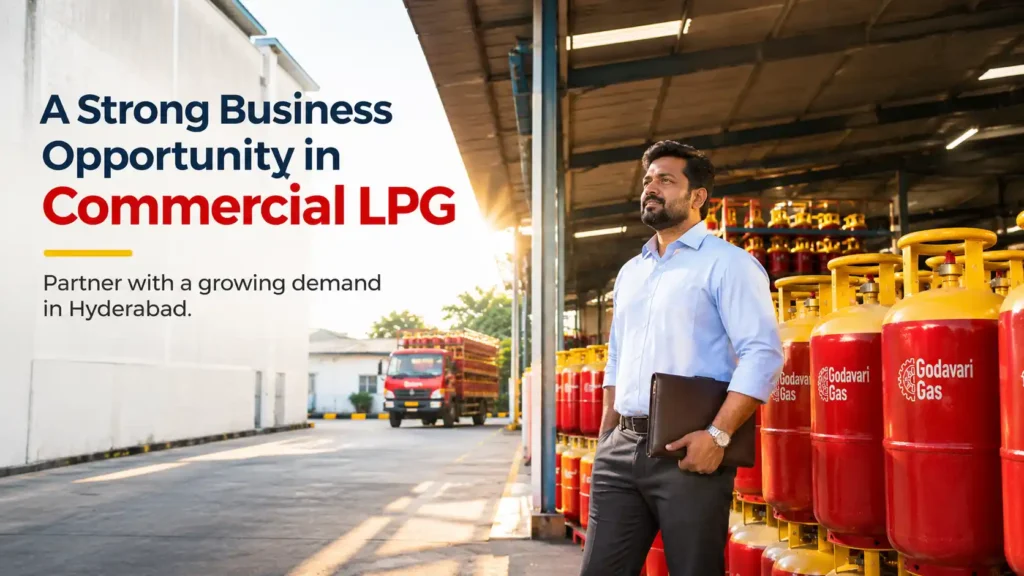
A commercial LPG dealership involves distributing LPG to businesses that require fuel for their commercial operations.
Unlike domestic LPG customers, commercial buyers may have different cylinder requirements, operating schedules and consumption patterns.
For example, a restaurant preparing hundreds of meals each day may require regular LPG deliveries. A catering company may need to plan cylinder availability around event schedules, while an industrial facility may have different fuel consumption and technical requirements.
A commercial LPG distributor helps coordinate the supply of suitable LPG products to these businesses within the agreed operating area.
What Does a Commercial LPG Dealer Do?
Depending on the supplier agreement and the applicable business model, a dealer’s responsibilities may include:
- Identifying potential commercial LPG customers
- Managing customer enquiries and supply requirements
- Maintaining authorised cylinder inventory
- Coordinating cylinder deliveries and returns
- Maintaining relevant business and delivery records
- Following applicable storage and transportation regulations
- Managing customer service and commercial relationships
The exact responsibilities should be clarified with the LPG company before entering into a dealership agreement.
2. Research Commercial LPG Demand in Your Target Market
Before starting any distribution business, it is important to know who your potential customers are.
Commercial LPG is used by different types of businesses, but the existence of commercial establishments in a locality does not automatically mean that there is unmet demand.
Identify Potential Commercial Customers
Begin by researching businesses that may regularly purchase commercial LPG.
- Restaurants and food courts
- Hotels and commercial kitchens
- Catering businesses
- Cloud kitchens
- Corporate and institutional canteens
- Bakeries and food production units
- Manufacturing and industrial establishments
Each business category may have different requirements regarding cylinder capacity, order frequency, delivery scheduling and commercial arrangements.
Study the Existing Suppliers
Research which LPG companies and distributors currently serve your proposed market.
Understand the types of customers they support, the products offered and the factors that influence buying decisions.
Useful questions include:
- Which commercial customer segments operate in the area?
- How do businesses currently arrange their LPG supply?
- What delivery expectations do commercial customers have?
- What are the major challenges involved in serving the location?
- Is the proposed territory available under the supplier’s dealership model?
Market research should help you assess realistic demand, not simply count the number of nearby restaurants.
3. Choose the Right Commercial LPG Company
Choosing an LPG supplier is one of the most important decisions involved in starting a dealership.
Before applying, review the company’s products, dealership structure, supply arrangements and commercial conditions.
Questions to Ask a Potential LPG Supplier
- Is dealership availability confirmed in my proposed territory?
- What are the eligibility requirements?
- What infrastructure and investment will I be responsible for?
- What products will I be authorised to distribute?
- How will stock ordering and delivery coordination work?
- What marketing or operational support is provided?
- What are the payment terms and distribution responsibilities?
- How are dealership performance and contract conditions evaluated?
Make sure important commitments are documented in the dealership agreement.
Explore Godavari Gas Dealership Opportunities
Godavari Gas offers commercial LPG dealership opportunities for eligible entrepreneurs, existing gas distributors, industrial suppliers and traders with distribution capabilities.
The company’s published dealership information describes potential assistance with marketing, logistics coordination and technical guidance.
Applicants should confirm the actual support available, territory conditions and applicable commercial terms directly with the company.
Learn more on the Godavari Gas Dealership Opportunities page.
4. Prepare a Commercial LPG Dealership Business Plan
A practical business plan helps you understand whether your proposed distribution operation makes financial and operational sense.
You do not need an unnecessarily complicated document. Start with the information that will influence your investment and everyday decisions.
Define Your Target Customers
Identify the commercial sectors you intend to serve and estimate the number of potential customers that could reasonably consider your supply service.
Plan Your Distribution Territory
Study the geographical area, possible delivery routes, transport costs and customer accessibility.
Estimate Your Operating Expenses
Consider the costs of premises, inventory, manpower, transportation, administration, maintenance and compliance.

Prepare a Working Capital Plan
Businesses require sufficient working capital to manage recurring expenses and payment cycles.
Your plan should consider how long customers may take to pay, when suppliers require payment and how much money may remain tied up in inventory or other business commitments.
Evaluate Business Risks
Consider possible changes in demand, operating expenses, delivery disruptions, payment delays and regulatory requirements.
A good business plan should explain how the operation would manage these challenges rather than relying only on optimistic sales assumptions.
5. Understand the Investment Required
One of the first questions entrepreneurs ask is how much money they need to start a commercial LPG dealership in India.
The actual investment depends on the dealership arrangement, proposed territory, infrastructure requirements and scale of operations.
There is no single investment amount that applies to every commercial LPG distribution business.
Common Investment Categories
- Business premises: Costs associated with suitable office and storage arrangements.
- Storage infrastructure: Applicable safety and facility requirements.
- Regulatory compliance: Professional services, documentation and required approvals.
- Product inventory: Initial stock and related financial arrangements.
- Transportation: Suitable delivery resources and logistics costs.
- Manpower: Employees needed for authorised operations.
- Working capital: Funds required for ongoing business expenses.
Before investing, request written information about the company’s actual dealership requirements and cost responsibilities.
Avoid relying on advertisements or third party websites that promise fixed dealership profits without explaining the underlying operating expenses.
6. Understand LPG Storage and Infrastructure Requirements
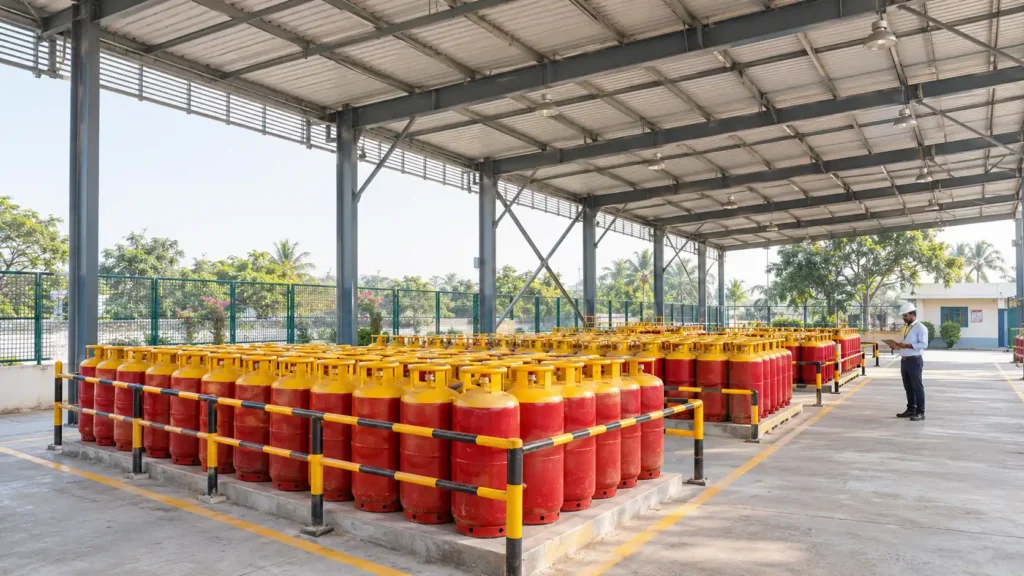
Commercial LPG distribution requires appropriate storage and handling arrangements.
Because LPG is a flammable substance, its storage and transportation are subject to safety requirements and applicable regulations.
Storage Facilities
Before choosing a godown or other storage premises, determine which legal requirements apply to your proposed operation.
Important considerations may include site suitability, approved layouts, storage capacity, access arrangements and other applicable safety conditions.
Do not assume that an ordinary warehouse can be used for storing LPG cylinders.
Delivery Arrangements
A distributor must consider how cylinders will move between authorised storage facilities and commercial customers.
Transport arrangements should follow the applicable requirements for LPG cylinder handling, loading and transportation.
Godavari Gas lists a delivery vehicle as a preferred consideration for dealership applicants. The exact arrangement should be discussed during the application process.
Trained Personnel
Employees involved in LPG operations should receive appropriate training for their assigned responsibilities.
Safety awareness, authorised handling procedures, operational records and emergency planning must be treated as important parts of the business.
7. Check the Licences and Regulatory Approvals
Commercial LPG distribution is a regulated activity. The approvals required depend on the specific business operations, storage arrangements and applicable laws.
Business Registration and Trade Permissions
Depending on the business structure and location, applicants may need relevant business registrations, tax registrations and local permissions.
The applicability of these requirements should be checked with qualified professionals and the relevant authorities.
PESO Requirements
The Petroleum and Explosives Safety Organisation, commonly known as PESO, administers important safety regulations relating to gas cylinders and specified storage activities in India.
The Gas Cylinders Rules, 2016, together with subsequent amendments, are relevant to determining regulatory obligations for cylinder related activities.
Depending on the proposed premises, activity and applicable exemptions, a storage licence or other approval may be necessary.
Applicants should verify the latest rules and seek appropriate professional guidance before committing to storage infrastructure.
Official references:
- Gas Cylinders Rules, 2016
- Gas Cylinders Amendment Rules, 2026
- Gas Cylinders Second Amendment Rules, 2026
Regulatory compliance must be confirmed for the specific operation. An LPG dealership agreement does not automatically replace statutory approvals.
8. Apply for a Commercial LPG Dealership
Once you have researched your market and reviewed the financial and operational requirements, you can begin discussing a dealership opportunity with an LPG company.
Step 1: Identify Your Preferred Location
Prepare the city, district or proposed territory where you intend to establish the business.
Step 2: Prepare Your Business Information
Collect your business details, existing distribution experience, relevant infrastructure information and initial investment planning.
Step 3: Submit a Dealership Enquiry
Contact the company through its official website or approved enquiry channel.
Step 4: Discuss Eligibility and Commercial Terms
Understand the available territory, product portfolio, financial responsibilities, infrastructure expectations and contract conditions.
Step 5: Complete the Necessary Reviews and Approvals
Any further documentation, agreement, infrastructure development or regulatory approval must follow the applicable company and statutory requirements.
Application and approval procedures vary between companies. Submitting an enquiry does not guarantee dealership allocation.
9. Plan Your Commercial LPG Distribution Operations
Receiving dealership approval is not the end of business planning. The daily operation must be organised to serve commercial customers responsibly.
Customer Management
Keep accurate business customer details, order information and authorised delivery records.
Inventory Planning
Monitor stock availability, cylinder movement and supply requirements according to the company’s procedures.
Delivery Coordination
Plan routes and delivery schedules while complying with applicable transportation and handling requirements.
Customer Communication
Maintain clear communication regarding order requirements, delivery arrangements and commercial terms.
Financial Monitoring
Review revenue, operating expenses, customer payments and working capital regularly.
These operational habits can help a distributor identify problems early and manage the business more effectively.
10. How to Find Commercial LPG Customers
A commercial LPG dealership depends on developing genuine business relationships.
Instead of approaching every business in the same way, understand the needs of different customer categories.
Restaurants and Commercial Kitchens
These customers may value practical delivery coordination, suitable cylinder options and clarity about supply arrangements.
Hotels and Hospitality Businesses
Hospitality operations may have requirements related to consumption planning, procurement procedures and supply continuity.
Catering Companies
Catering businesses may need to plan LPG requirements around changing event schedules and operating locations.
Industrial Customers
Industrial buyers may require additional discussions about fuel suitability, technical specifications and applicable operational requirements.
Build business relationships through transparent communication, authorised products, accurate information and responsible service.
A distributor should never promise supply capabilities, prices or technical services that have not been confirmed with the LPG company.
11. Common Mistakes to Avoid Before Starting
Entrepreneurs can reduce avoidable business risks by thinking carefully about a few common mistakes.
- Starting without market research: Do not assume that commercial demand automatically guarantees customers.
- Underestimating working capital: Plan for recurring costs and payment delays.
- Choosing premises without checking compliance: Obtain appropriate professional guidance before committing to a storage location.
- Ignoring operational expenses: Delivery, staffing and administration can affect financial viability.
- Depending on promised profits: Evaluate actual costs and contract terms rather than unsupported earnings claims.
- Failing to review the agreement: Understand territory conditions, responsibilities and commercial obligations before signing.
A well-researched business decision is more useful than rushing into an investment based on assumptions.
12. Why Explore Commercial LPG Dealership Opportunities with Godavari Gas?
Godavari Gas, powered by Vikramaditya Petroleum India Pvt. Ltd., provides LPG solutions and presents distribution partnership opportunities through its website.
The company welcomes dealership enquiries from entrepreneurs, existing gas distributors, industrial suppliers and traders with relevant capabilities.
Its dealership information highlights potential benefits such as marketing assistance, logistics coordination and technical guidance, subject to the applicable arrangement.
Applicants should contact Godavari Gas to confirm the territories currently accepting enquiries, eligibility requirements and actual partnership conditions.
You can also learn more about the company’s products through its Packaged Cylinder Distribution services.
Frequently Asked Questions
1. How can I start a commercial LPG dealership in India?
Begin by researching your local commercial LPG market, evaluating potential suppliers, preparing an investment and operations plan, checking infrastructure requirements and submitting an enquiry to a company offering dealership opportunities.
2. Can I start an LPG dealership without previous gas distribution experience?
Some companies consider applications from new entrepreneurs. Godavari Gas lists entrepreneurs among its potential applicants, but eligibility and approval remain subject to company requirements.
3. What investment is needed to start a commercial LPG dealership?
Investment depends on the business model, location, storage requirements, initial inventory, transportation and working capital. Applicants should obtain current company specific financial information.
4. Is a PESO licence required for commercial LPG distribution?
PESO licensing requirements depend on the storage activity, quantities, premises and applicable legal provisions. Applicants should verify their obligations under the current Gas Cylinders Rules and relevant amendments.
5. Is a commercial LPG dealership profitable?
Financial performance depends on customer demand, purchasing and selling terms, operating expenses, working capital and other business factors. Profitability cannot be guaranteed.
6. Can an existing industrial supplier apply for a commercial LPG dealership?
Yes. Godavari Gas lists industrial suppliers as a category of potential dealership applicants. The company must confirm eligibility and any additional infrastructure or regulatory requirements.
7. Where can I enquire about a Godavari Gas dealership?
Visit the official Godavari Gas Dealership Opportunities page or use the company’s Contact Us page.
Final Thoughts: Build Your LPG Distribution Business on the Right Foundation
Starting a commercial LPG dealership in India requires more than choosing a supplier and arranging an initial investment.
A prospective dealer needs to understand the local commercial market, evaluate operating expenses, prepare suitable infrastructure and meet applicable safety and regulatory requirements.
Whether you are an existing distributor considering a new business category or an entrepreneur exploring commercial LPG for the first time, thorough research and responsible planning should come before financial commitments.
If you are interested in exploring dealership opportunities, Godavari Gas provides a way to begin that conversation.
Planning to Start a Commercial LPG Dealership?
Explore dealership opportunities with Godavari Gas. Share your preferred business location and distribution background to learn about current eligibility and partnership requirements.